This article was originally uploaded by The Post. Read it on their website here.
Antonia Watson is chief executive of ANZ, Roger Gray is chief executive of Port of Auckland, and both are co-chairs of Champions for Change, an initiative of Global Women promoting equity and inclusion in the workplace.
OPINION: As we approach Matariki and look to the year ahead, we find ourselves at a pivotal moment.
We have a choice to either lean in and face our new future together collectively as a nation or be left behind. Our demographics are dramatically changing, and we need every person in New Zealand’s waka with us if we are going to make it.
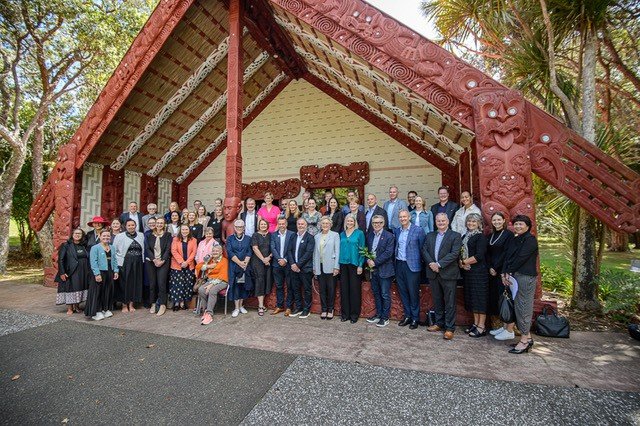
One of our Champions and speakers at a recent hui at the Treaty Grounds in Waitangi, former Prime Minister Dame Jenny Shipley, talked of Hawaiki Hou – a new Aotearoa. She challenged us to ask what we were doing to build a post-Treaty nation together. Sitting on the sidelines as an observer was not enough, Dame Jenny said. We must be active participants in shaping what that future looks like.
Aotearoa is already super diverse and that’s set to exponentially increase in the coming years. As another of our speakers Dr Paul Spoonley, emeritus professor at Massey University put it so clearly: “We will have no choice but to adapt. Uniformity, inequity, and exclusion simply won’t work in the future.”

By 2030 there will be more Māori, Pasifika and Asian New Zealanders than those with European backgrounds. One in three under 25-year-olds will identify themselves as Māori. Māori are younger and growing faster than the rest of the population. Asian communities will comprise 24% of the population.
Our workforces are also rapidly aging and birthrates, particularly amongst New Zealand Europeans are steeply declining. The reality is New Zealand will look completely different to what and who it is today. For many organisations, one of the biggest commercial challenges we will face in the next 10 years is finding the workforce to meet our ever expanding and evolving needs.
These changes will either be a strategic threat or opportunity for businesses. These people are our new customers and future workforce. Companies that can tap into that will be the ones that succeed in this quickly changing and uncertain world. Being inclusive is far from being a ‘nice to do’, or a corporate window dressing, but mission critical to all businesses in New Zealand.
It is commercially advantageous to have the whole population represented and importantly included in your workforces and leadership teams and is essential to creating a high-performing values-driven culture. Building more equitable and inclusive businesses, communities and countries is for everyone’s benefit. A path to growth, increased productivity and prosperity for us all.

All the research tells us that greater inclusion will make us a better organisation, a better country. There is a direct, proven correlation between inclusion and enhanced innovation and creativity, improved decision-making, increased employee engagement and better financial results. And what business leader wouldn’t want that?
In a practical sense, inclusion means actively looking for diversity of thought and life’s experiences in our workforces and, particularly, the leaders in our businesses. It means being broad minded in our recruitment processes.
Yes, the person must be qualified for the job, but do they also bring that something else? In 2025 and beyond, you must be able to work with and understand our fast approaching super diverse workforce and customers.
Earlier this year the Treaty Principles Bill had its final reading before being voted down, after more than 90% of the 300,000 submissions received were in opposition. Maybe the silver lining to this very public debate was that it showed how many New Zealanders cared about the Treaty and the relationship between Māori and Pākehā.
On that same day, Champions for Change, a collective of over 80 CEOs and Chairs of New Zealand’s top companies with a combined workforce of 170,000, gathered in Waitangi.
Each of the leaders took time out of their day jobs to travel, be present and prioritise this kaupapa, because it is the right thing to do, but also, selfishly, because it will make each of our businesses better.
What this recent discourse has provided is the chance for many New Zealand businesses to recalibrate and focus on what’s core and where we’ve landed as a group is firmly on inclusion or what Māori describe as Kotahitanga.
So, let’s make this new year one where we focus on inclusion to create strategic advantage for our businesses, communities and our country.
“Nā tō rourou, nā taku rourou, ka ora ai te iwi” – With your food basket and my food basket, the people will prosper.